A Small Spoken Rule for Looking at Art
A child notices a circle in a painted window. The caregiver names another circular form, then both step aside. That brief exchange captures the purpose of an art-looking game: a short spoken rule that tells a child exactly what to notice in one artwork, played at whisper volume and ended on purpose.
No paper, pencils, or props are needed. The artwork supplies the material; the rule directs attention toward it. Each round has a finish line, such as three named shapes, one color match, or a single sentence about a detail. Looking has a beginning and an end.
The creative yield is the noticing itself. A child distinguishes a curve, connects two colors, imagines a sound, or builds a small story around something visible. Nothing is made, collected, or scored. Within developmental play, this gives a museum visit a manageable task while preserving room for the child's interpretation.
Giving Stillness a Job in the First Gallery
A first gallery visit asks several things of a child at once: stand still, keep a low voice, share space, and attend to something that does not move. A looking rule gives that attention a specific job.
Consider the difference between “Look at this painting” and “Find a shape with a curved edge.” The first invitation leaves the child to decide where to begin. The second establishes a visible target and a small vocabulary task. The child can search, choose, and answer. Without such a task, moving past the next frame can become the main activity.
Gallery manners belong inside the game instructions. The caregiver establishes the viewing position behind any marked boundary, keeps speech quiet enough for the child beside them, and leaves other visitors a clear view. These actions become part of how the game works, rather than a separate lecture before entering.
Shared space also shapes turn-taking. An adult models one observation, the child receives a turn, and both release the viewing position when the round ends. The stop matters as much as the search.
Finding Shapes and Matching Color in One Painting
Three Shapes, With the Adult First
Choose a painting with repeated curves, angles, windows, or other recognizable forms. From a position where the whole canvas is visible, the caregiver whispers: “We will find three shapes; I name the first, you name two, then we step aside.”
The adult might name a circular window. The child then chooses two forms elsewhere in the painting. Adult-first turn-taking establishes what counts as a find and shows the scale of the search without correcting the child's opening response.
Preschool and early primary children offer a practical starting audience; older children can use the same rule with repeated geometry. These age bands serve as starting guidance: choosing the rule should follow the child's ability to understand and hold its finish line.
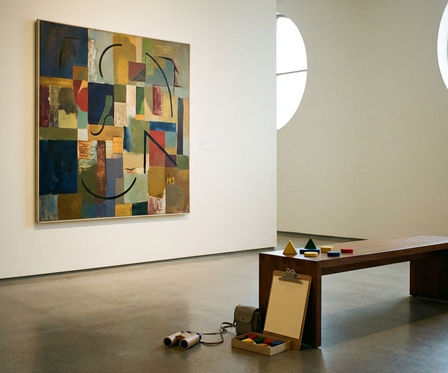
The task asks the child to distinguish forms within the picture. A painted circle may sit inside a window, a plate, or a broad curl of paint. Naming it completes a turn; speed earns nothing.
Keep Shapes Visible
Stand where the whole canvas can be seen, speak at whisper volume, and keep arms down. Use words and the direction of the gaze to locate a shape without reaching across another visitor's view.
One Color Connection
Color match uses a different feature of the same setting. The child chooses a color already visible on clothing or elsewhere in the room, then finds a similar color in the painting. One match finishes the round.
For early primary children, the exchange can introduce a precise comparison: a sleeve and a painted patch might share a dark green. Keep the match visual and spoken, with clothing left in place. This is an alternative rule for a later visit, rather than an extra round after the first shape hunt.
Whispering a Sound or Telling One Detail's Story
Name the Sound Inside the Picture
A painting of rain, water, animals, instruments, or a crowd offers material for a soundscape. The caregiver asks, “If this painting made a sound, what would it be? One sound only.” The child whispers the name of the sound, and the round ends.
“Rain tapping” completes the task. So does “a dog barking.” The imaginative work lies in connecting a visible feature to an inferred sound—without performing that sound in the gallery. The instruction should establish this distinction before the child answers.
This rule suits children who can already tolerate a brief standing pause and keep an imagined noise within a whispered phrase. It gives imaginative play a quiet form.
Anchor a Sentence to Something Visible
For a one-detail story, the child selects one small thing with the eyes and says one sentence about it. A crowded narrative painting offers choices, but the chosen detail keeps the story focused. A painted basket might prompt: “Someone packed that basket for a long walk.”
The basket supplies the visible fact; the sentence supplies the invention. This connects the close observation used in creative arts with a small narrative decision. Children ready to hold a single sentence can try it on a return visit, with the same clear ending and step aside.
Select the Canvas Before Announcing the Game
The sequence works best as a short plan. The caregiver scans the room quietly, chooses an accessible painting, and matches the rule to what is already there. Searching another wing after announcing a shape hunt turns a compact invitation into a prolonged search.
- Choose the painting. Look for repeated forms and a position with a clear view.
- State the finish line. Tell the child exactly how the round ends.
- Model one turn. Name a visible form in a quiet voice.
- Take the child's turns. Allow time to look without adding another task.
- Step aside. Finish when the agreed finds are complete.
If a marked boundary, tour group, or crowded bench prevents a clear full-frame view, skip that canvas rather than standing in a walking lane.
Set a standing cap of about three minutes, and finish sooner when attention thins. A child looking toward the doorway has already supplied a useful stopping signal. Close the round and move on; introducing a new rule in the same spot extends the demand just as interest is leaving.
Make Three Shapes the Whole First Game
For the first museum visit, the three-find shape hunt offers the clearest opening. It needs no reading or supplies, and the adult can model it in one whispered sentence. Repeated curves or angles provide the search material; one adult find and two child finds provide the ending.
Save color match, soundscape, and the one-detail story for return visits, once the child knows the habit of finishing. Begin with one painting, complete the three-find shape hunt, and leave that room while the child still wants another turn.