What Does the Card Ask the Child to Do?
What is the child actually asked to do when a talking flashcard speaks?
The child inserts or presses a card, hears a fixed label or short phrase, and is usually expected to point, match, or echo. The reader supplies the pronunciation, while the picture supplies the subject. Depending on when the recording starts, the child may have little opportunity to produce a word independently.
That sequence matters when choosing learning resources. A deck can contain many familiar words while giving the child very little responsibility for retrieving them. Pressing a card marked “apple” and repeating its recording completes the toy’s sequence. Asking for an apple at the snack table requires the child to bring that word into a different situation.
The useful test is whether the child can retrieve, vary, or use the word with a real object. A stored list of words cannot establish that on its own. The distinction gives caregivers a practical way to examine what happens between inserting the card and hearing the child speak.
When the Same Prompt Stops Counting as Practice
Watch the pause before the recording. Does the child look at the picture and begin to speak, or settle into waiting for the familiar voice?
After repeated passes through a deck, the sequence can become predictable: insert, listen, echo the final word. A child who repeats the end of “This is an apple” has joined in with the sound. That response alone leaves an important question unanswered: could the child produce “apple” before hearing it?
Useful repetition gradually gives the child more of the task. The adult holds the picture, leaves room for a response, and supplies the recording only when it helps. Across familiar encounters, the child may need less prompting. Stalled repetition keeps the same division of labour: the card supplies the word and the child follows.
Interest can also fade once the sound becomes familiar, while the deck continues playing precisely the same line. More cards may refresh the listening experience without changing what the child is asked to do. Before expanding the collection, it is worth checking whether familiar cards still invite an independent response.
What Showed Up in Short Play Sessions With Children
In hands-on reviews by this site’s reviewers, consumer picture-card toys were used with caregivers present during home and small-group play. Floor play and snack-table routines offered opportunities to compare a response to a picture with a response involving the corresponding object.
These were short observational sessions with young children, rather than a timed trial or clinical assessment. They describe the encounters reviewed and cannot establish how every device performs. Within that scope, the most useful observations concerned what happened when the picture and recording stopped supplying the answer.
Some children pointed and waited for the voice. Others echoed the last word. Reviewers also encountered children who named a pictured item yet did not use the same word for the matching object on the table. An apple card beside a real apple made that gap particularly clear: after the card was turned face-down, handing over the fruit asked something different from repeating its recorded name.
During snack, reviewers observed word use after children had handled the object, where hearing the card alone had not prompted the same response. That sequence does not isolate what caused the change. It does show why a review should follow the word beyond the speaker.
In shared play, an adult’s reply also gave the exchange somewhere to go. A request could lead to receiving the fruit; a correction could change what the adult offered.
Checks That Separate a Useful Card From a Noisy One
A caregiver can run the following checks in one sitting with familiar cards and matching household objects. Keep the exchange relaxed and leave room for the child to respond.
These checks fit consumer talking picture-card toys used at home. They do not assess augmentative communication devices or school literacy programs, which serve different purposes and require their own evaluation methods.
- Wait. Hold up a familiar card before activating the sound. Does the child offer the word, attempt it, or wait for the recording? Notice how much help starts the response.
- Transfer. Hide the card and bring out the matching object. Ask the child to hand it over or name it. The face-down apple card and real apple make a straightforward pairing.
- Variation. Give the word a job in a short exchange. Can the child request the apple, refuse it, or correct an adult offering the wrong item? Listen beyond the isolated label.
- Fade. Notice whether the child still chooses the card after its sound becomes familiar. Returning to use the picture in another game offers different evidence from repeatedly triggering the clip.
- Crowd-out. Compare the routine with and without the reader. At snack, does playback leave space for requests and replies, or occupy moments when adult and child were already talking?
Keep cards that support independent words and exchanges. Limit cards that remain enjoyable but mostly prompt echoes, using them briefly alongside real objects. Retire the deck from that routine when it repeatedly takes over the conversation or no longer attracts purposeful use. The sort needs no score.
Building Words Through Reply, Objects, and Routines
The clearest comparison concerns who produces the word and what happens next.
A card replays a stored line. Object-and-routine naming gives the child a reason to speak during a real task. Reversal play lets the child teach a silent toy or correct the adult. Each arrangement distributes responsibility differently, even when all use the same familiar vocabulary.
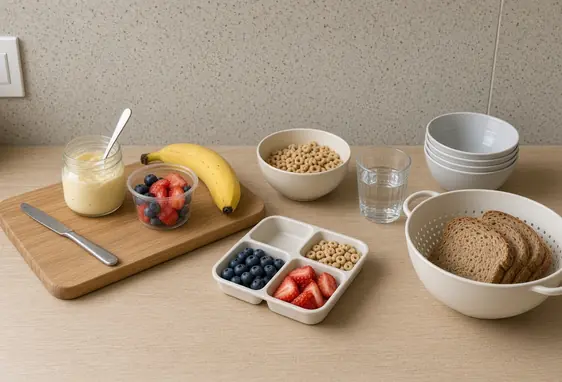
At breakfast, set out around three familiar objects, such as a spoon, an empty cup, and an apple. The adult waits before offering one. The child can request the cup, refuse the apple, or correct an offer of the spoon. Respond to the meaning of the contribution, then continue the routine. This makes developmental play part of an exchange the child already has a reason to join.
A silent plush toy changes the arrangement again. The adult can have it reach for the cup while asking for the spoon, leaving the child to correct the mismatch. This small piece of imaginative play gives the child authority over the answer.
Picture-book dialogue provides another useful comparison. An adult can ask which object a character needs, accept an unexpected answer, and ask why. A wrong answer can become the next conversational turn. Fixed card prompts rarely allow that kind of reply, so their contribution is narrower: they supply a consistent sound that an adult can carry into a more responsive exchange.
Which Cards Would Still Matter If the Voice Went Quiet?
Switch off the reader, or imagine the speaker stays silent, and make one pass through the familiar deck. Place each picture beside an object or a routine where its word could be useful. Give the child room to speak before supplying the label.
Keep within reach the pictures the child can use to request, identify, refuse, or correct. Set aside those that still depend entirely on the recording. A retained apple card might become a breakfast choice; a cup picture might help start an exchange about a drink. The remaining pile makes the next purchasing decision more concrete: another deck would add recordings, while the useful cards already have work to do.
If the voice stayed off through breakfast tomorrow, which cards in the ballpark of three would your child still use — and which deck is only talking to itself?