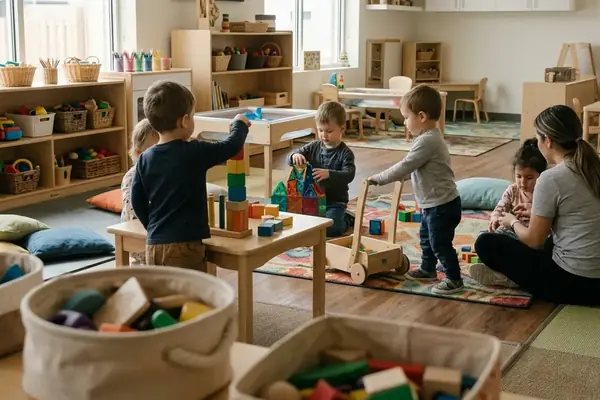
When the Cardboard Insert Becomes a Ramp
During a recent 45-to-60-minute session, a child completely ignored the wooden pieces of a birdhouse kit. They reached instead for the 9-inch cardboard packaging insert. Within minutes, they repurposed that simple piece of trash into a steep ramp for toy cars. They spent the rest of the hour testing different vehicles on the incline.
That single diversion shows what happens when a printed sample no longer governs the table: the work belongs entirely to the child. The box loses its authority. Imaginative play takes root in the space left behind. The child transitions from an assembler to an inventor.
Informal hands-on art sessions offer clues about which versatile supplies to choose. Offering those materials without turning a natural play impulse into a rigid lesson helps children feel comfortable testing their own ideas.
The Hidden Constraints of the Box Lid Photo
A pre-cut foam kit with approximately 12 to 15 pieces can limit material combinations to fewer than 5 viable assembly paths. The step list dictates the sequence. The pre-cut pieces dictate the shape. The hero photo on the lid quietly defines success as strict resemblance to the sample.
Children quickly learn to wait for the next instruction. They show less tolerance for mess. They hesitate to revise their work because the optimal outcome is already pictured on the packaging. Any deviation feels like a mistake.
The Psychological Weight of the Box Lid
The image on the packaging acts as an invisible supervisor. It tells the child exactly what they should value. Pre-packaged crafts certainly have a place for travel, gifts, or a rainy-day shortcut. The dynamic only becomes restrictive when these kits form the default art diet. A steady stream of scripted projects trains children to follow directions rather than trust their own creative arts instincts. They begin to view art as a test with a correct answer. Encouraging a mindset where the process holds more value than the final product requires a different approach to materials.
Watching Unstructured Play Unfold in the Studio
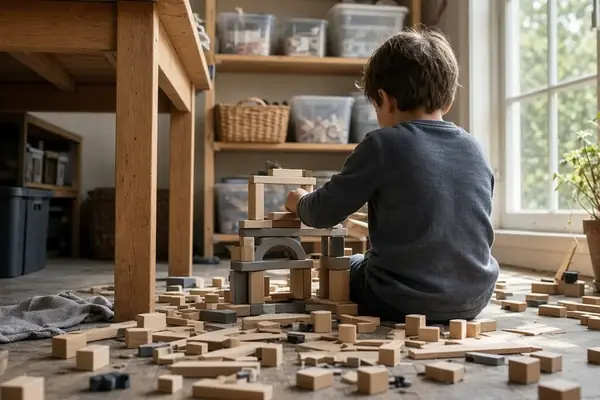
A different rhythm emerges when supplies are loose. During unstructured sessions spanning 90 to 120 minutes, children met a pile of paper, tape, cardboard, and found objects. They dwelled longer with individual materials. They made frequent mid-course changes.
Children borrow each other's ideas rapidly when the end goal is undefined—observation of mixed-age home and studio sessions indicates as much. In one instance, a 14-inch cardboard city collapsed after 20 minutes of stacking. The children experienced a brief moment of disappointment. Facilitators initially considered removing all adhesives to force structural balancing. They discarded this alternative after observing that children spent too much time frustrated by collapsing towers.
Instead, they introduced a single roll of 1-inch masking tape. This small addition provided enough stability to encourage taller structures without dictating the final shape. The children immediately began reinforcing their walls.
Contextualizing the Studio Observations
These observations stem from mixed-age home and studio sessions involving groups of 3 to 5 children, meaning the dynamics may shift significantly in larger, structured classroom environments. The small group size allowed for deep focus and quiet negotiation.
Selecting High-Yield Supplies for Open Exploration
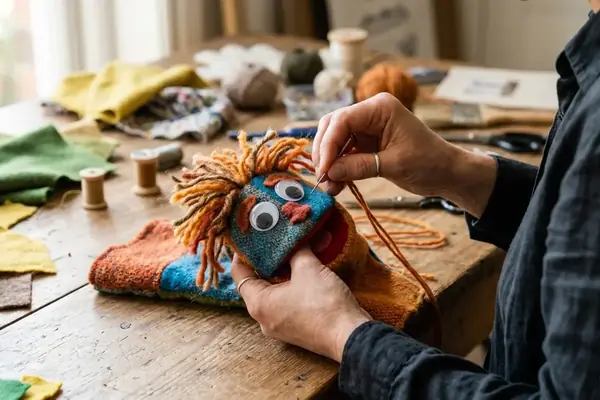
A working test for a versatile supply requires it to support at least two unrelated uses. A 3-inch cardboard tube passes this test easily. It can serve as a telescope, a castle turret, or a puppet body. You can build a highly effective learning environment with scrap paper, cardboard, masking tape, glue sticks, yarn, fabric offcuts, and clothespins.
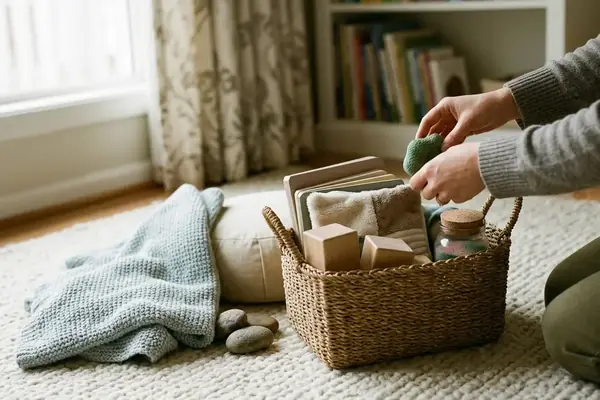
A 6-to-8-item found-object bowl containing items like bottle caps and fabric offcuts offers immense value.
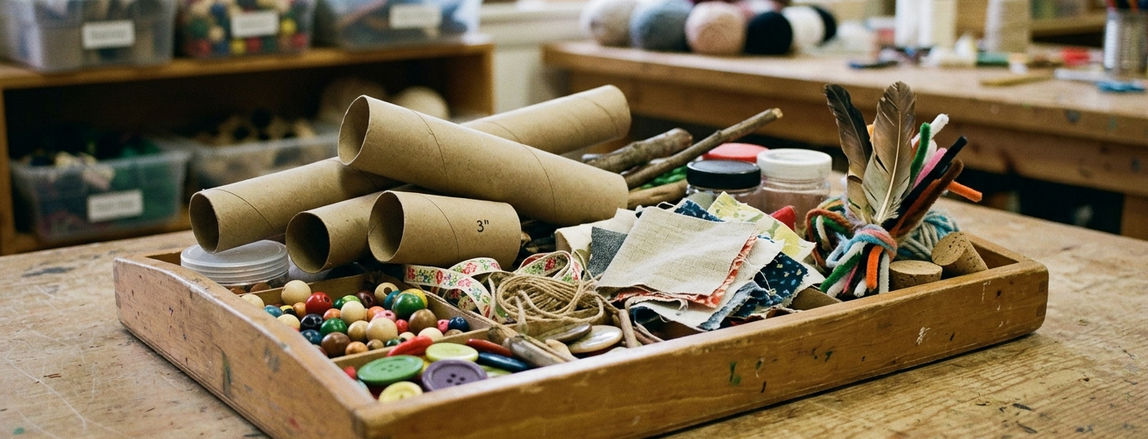
These open-ended learning resources invite experimentation. A bottle cap might become a steering wheel in one project and a robot's eye in the next. Avoid one-use novelty pieces that only complete a pictured kit. Pre-printed character heads and single-outcome foam shapes offer very little room for interpretation. They push the child back toward a scripted outcome. True creative freedom requires materials that remain neutral until the child assigns them a purpose.
Setting the Stage for Independent Creation
The way adults present materials heavily influences the resulting play. Start by covering the table with a 24-by-36-inch newspaper ground cover to contain spills. Set out a limited tray of supplies. Sit nearby with your own scrap of paper. Resist the urge to demonstrate a finished model.
The language used at the table matters immensely. Saying "the tape is here if something needs to hold" invites the child to solve their own engineering problems. Announcing "we are making foxes today" accidentally scripts the entire session.
Containment Tactics for Mess Anxiety
Many adults feel anxiety about mess and wasted supplies. You can manage this by establishing a clear tray boundary. The tray acts as a physical limit for the project. Give a 5-minute warning before tidy-up to help children transition away from their work. A predictable routine makes the cleanup process feel guaranteed and manageable for everyone involved. When adults feel relaxed about the physical space, children feel more freedom to explore the materials deeply.
Comparing the Rhythms of Two Different Approaches
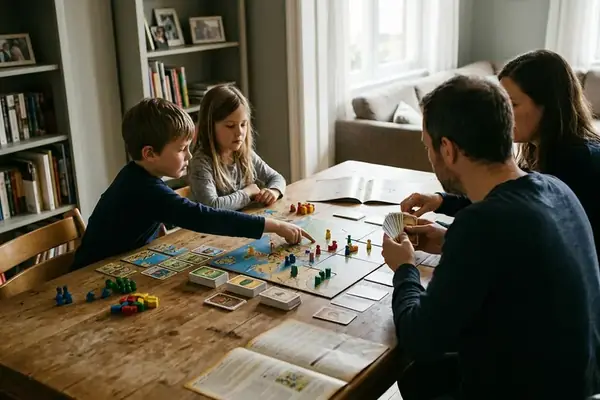
The atmosphere of a kit-based evening feels distinct from a materials-based evening. Kit-based evenings tend to start faster. The adult usually holds the plan. The final result is often photo-ready. There is very thin room for substitution when a piece is missing. A lost foam ear halts the entire project. The child must wait for the adult to fix the problem.
Materials-based evenings start slower. Children spend time negotiating what they want to build. Observations frequently reveal 2 to 3 structural revisions during a materials-based evening. With cardboard tubes and masking tape, those revisions often involve tearing apart a first attempt to build something stronger. The child learns to evaluate their own work.
The objects remaining on the table rarely look like a store sample. They hold immense value because they can be rebuilt, modified, or expanded the next day. The play continues long after the initial construction phase ends.
Your Next Step for the Art Table
This week, leave a single pre-planned craft kit closed on the shelf. Set out exactly 3 open items for a 30-to-45-minute block. Provide paper or cardboard, tape or a glue stick, and a bowl of found objects. Keep any pictured samples completely out of sight. Stay at the table without making a model yourself. If a child asks what the project should become, name a material rather than a finished craft.