Quick Nav
- The Cost of Letting the Face Decide
- Box Copy Beside the Play on the Rug
- The Story Already Underway When the Doll Arrives
- Hips, Scarves, and Carrying Size Mid-Story
- The Adult's First Move: Script or Open Seat
- Five Checks With Two Dolls in Hand
- The Doll That Keeps the Story Going
The Cost of Letting the Face Decide
In a toy aisle, the face reaches the caregiver first. Sculpted cheeks, glossy eyes that close when the box tips, a mouth shaped mid-cry: these details arrive well before anyone thinks to bend an arm or check whether the dress comes off. When the face makes the decision, the household can end up paying more for a doll that never enters a story, while a plainer figure that would have carried the whole afternoon stays on the shelf.
The losses are concrete. The money goes first. Storage goes next: a large boxed doll and its molded accessories take up a good stretch of shelf or bin space long after the novelty fades. The hardest loss to see is a stretch of imaginative play the child was ready to run and had no figure to run it with.
A different comparison helps. Hold the two candidates side by side and ask what each one invites a child to do. That question takes a minute to answer in the aisle, and it tends to separate a doll that gets played with from one that gets looked at.
Box Copy Beside the Play on the Rug
Front-of-box language follows a familiar pattern. Rooted hair, weighted vinyl skin, blinking eyes, a crying sound, a feeding set with a bottle that seems to empty: each feature is listed as though the feature itself delivered richer pretend play. The copy treats realism and imaginative depth as one quality.
Pretend play depends on three things, and they are fairly plain:
- A role the child can assign and reassign.
- An object that stands for something else, such as a block that becomes a phone or a cloth that becomes a river.
- A plot the child can change when the game turns.
Set the box features against that list and a pattern worth watching appears. A finished-looking doll often announces its role before play begins. A crying newborn is a baby to be soothed, and a fashion figure is a fashion figure. A simpler figure with a neutral face can be a sister at breakfast, a ship's captain by lunch, and a lost traveler before dinner. Parents and teachers who watch for this tend to see it often. Treat it as a tendency to look for in a particular child, since some children will happily reassign even the most finished doll.
Read the Box Twice
For every feature listed on the packaging, ask whether it opens a new role or confirms the one already printed on the front.
The Story Already Underway When the Doll Arrives
Children rarely start from nothing. A new doll walks into a game that is already running, and that game does much of the choosing.
A child absorbed in caregiving may take to a realistic baby doll at once, feeding it, burping it, and tucking it under a blanket. A child halfway through a couch-cushion expedition may barely glance at that same doll and instead grab a stylized figure, because the expedition is short a character.
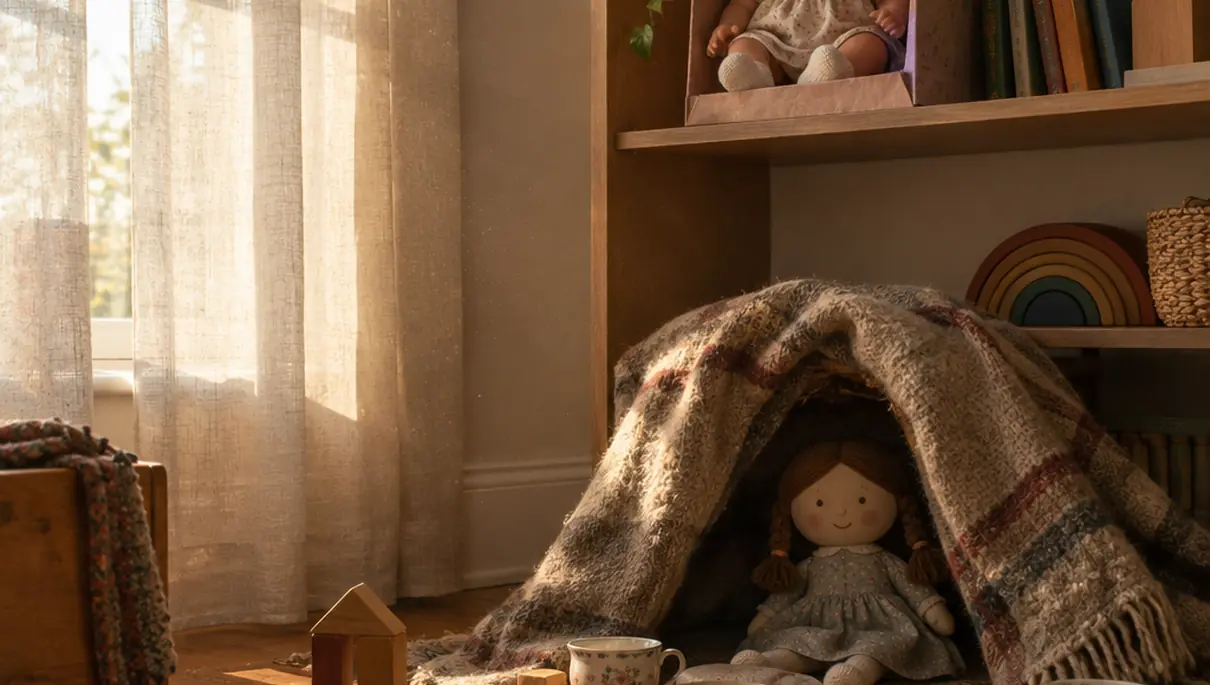
Picture one living room on one afternoon. A detailed vinyl infant gets a brief feeding routine and is then set beside a sofa pillow, its job finished. Across the room, a plain cloth doll is pulled into the cushion expedition. It rides in the boat as a passenger, gets stranded on the armrest as a hiker who needs rescue, and later stirs an imaginary pot as the camp cook. Both dolls were played with. Only one fit the story that was already moving.
The practical lesson is modest. Before choosing, notice what the child has been playing lately.
Hips, Scarves, and Carrying Size Mid-Story
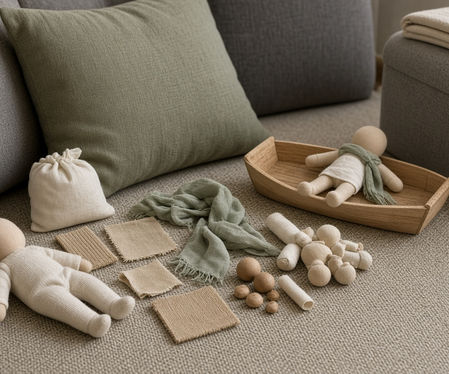
Features make more sense when they are judged as actions. Four checks cover most of what matters in constructive and imaginative play:
- Sitting. Can the doll bend at the hip and sit inside a shoebox car or a laundry-basket boat? Fabric-jointed hips usually allow this. Limbs fixed in one mold do not.
- Changing clothes. Can a child wrap the doll in a plain play silk or pull off its outfit without help? Sewn-on clothing and tight closures often need adult fingers, and waiting for an adult can stall a plot that was about to change direction.
- Carrying size. A doll in roughly the 10-to-14-inch range travels well. It fits in one arm, in a box, and on a block tower, so it can follow the child from room to room and from one game to the next.
- Props. A molded bottle supports one motion, feeding. A wooden cup can serve as a soup bowl on one turn and a stepping stone on the next. A cloth or a block stays open in the same way.
A lifelike face on stiff limbs with sealed clothing can be harder to move through a changing story than a plain doll that sits, wears a scarf, and rides in a box. Realism is not the problem here. Fixed parts are.
Open Props Travel Further
Count the accessories in the box that serve only one purpose. A cup, a scrap of fabric, or a small block from the learning resources bin can add more roles than a branded feeding set.
The Adult's First Move: Script or Open Seat
An adult who joins the play can enrich it with either kind of doll. What matters more is the adult's first move.
Compare two openings with the same doll in the first one to three minutes of joint play, whether on a living-room rug or in a classroom housekeeping corner. In the first, the adult hands over the bottle and says, "She's hungry, feed her." The next several turns tend to stay mechanical: bottle, burp, blanket. In the second, the adult sets down an empty cup and asks, "Who else is at this table?" The doll's identity stays open. She might be a guest, a sibling, or a traveler who just arrived.
This observation applies to those opening minutes of shared floor play at home or in a classroom corner. It says nothing about therapy goals or curriculum outcomes. Adult talk can also crowd a game, so the useful skill is a well-placed question followed by stepping back.
Five Checks With Two Dolls in Hand
With both candidates in hand, these questions take about a minute and require no unboxing:
- What game is this child already playing? Think back over the last few weeks of play at home.
- Can the body take a new pose, or only the molded one? Gently test the hips and shoulders through the packaging window.
- Can a cloth change the role? Picture a scarf over the shoulders. Does the doll become someone new?
- Do the accessories suggest only one script? Sort them into single-use props and open props.
- Will an adult be nearby, or must the doll work alone? A doll that must carry the play alone needs more open features.
If there is no chance to watch even a short tryout, treat the face as the weakest clue and decide on the features plus the child's current game.
Pose Beats Polish
When the two dolls come out even on every other check, choose the one whose body can sit, hold, and travel.
The Doll That Keeps the Story Going
Return to the two dolls on the counter: one detailed and finished, one plainer and more pliable. Imagine each on the rug at home, after the demonstration is over and the adult has moved back to the sofa.
Which of these two dolls will still be inside a story ten minutes after you stop showing it what to do?