A Building Gift That Still Shapes Play
Friedrich Froebel introduced the concept of educational play materials when he founded the first kindergarten in 1837. The original 1837 Froebel set consisted of soft woolen balls, evolving to wooden spheres, cylinders, and cubes by 1838. This deliberate progression centered early education on open-ended construction rather than fixed outcomes.
Today, caregivers face a stark contrast in the toy aisle. Highly scripted STEM kits resolve in a single, predetermined build. Flexible materials invite repeated redesign. The American Academy of Pediatrics report on the power of play emphasizes the developmental necessity of unstructured activity.
This analysis examines creativity, problem-solving, frustration tolerance, and long-term play value from both parent and educator viewpoints.
The One-and-Done Problem With Scripted STEM Kits
A 'one-and-done' kit provides predetermined parts and a single correct assembly path. The finished model rarely invites redesign—a limitation that shifts agency from the child to the manual. Step-by-step instructions narrow goal-setting and eliminate the need for iteration.
Caregivers frequently recognize a distinct shelf-life pattern with these products. Play logs record an intense first session lasting roughly 45 to 90 minutes, followed by permanent display. Once the final piece snaps into place, the cognitive challenge ends.
The shelf-life of a scripted kit varies heavily depending on whether the final model has moving parts or is purely decorative. Yet, even functional models often fail to inspire a complete teardown and rebuild.
What Open-Ended Construction Materials Actually Offer
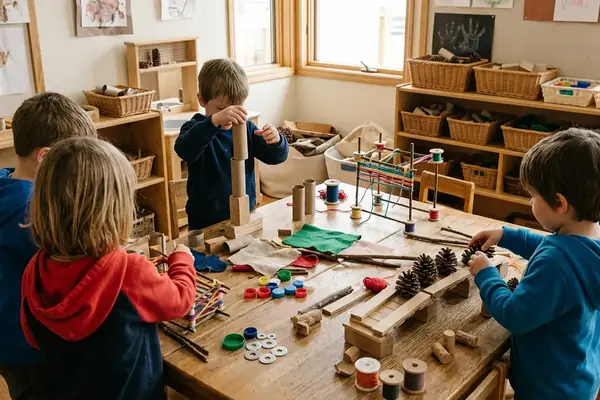
Open-ended materials lack a fixed end state. They require the builder to supply the vision. Standard unit blocks based on the 1.375 x 2.75 x 5.5 inch ratio, magnetic tiles, loose parts, planks, and natural objects all fit this category. The mathematical relationship between the pieces allows for intuitive scaling and structural stability.
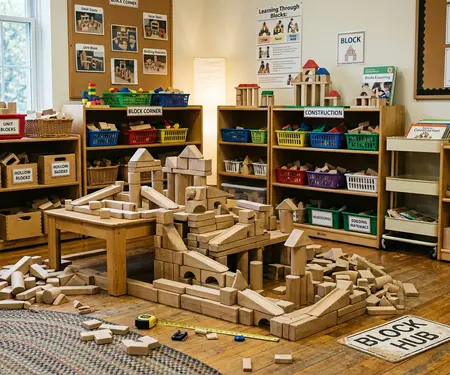
The same set supports building, storytelling, sorting, and spatial challenges across different skill levels. Constructionist learning ideas suggest that knowledge grows when children make and remake physical structures of their own design.
Sustained cooperation over consecutive review cycles with early childhood centers demonstrates that unstructured materials prompt deeper spatial reasoning. While open-ended materials foster broad spatial awareness, they do not automatically confer specific engineering vocabulary without guided adult interaction.
Creativity Thrives When the Blueprint Disappears
Divergent thinking requires generating multiple valid solutions rather than matching a pictured model. Open materials force children to invent constraints. They must decide the height, balance, and theme instead of following printed rules.
To support this deep creative work, materials stay available for about 3 to 6 weeks in many classroom settings. This duration allows ideas to percolate and structures to evolve over consecutive days.
Parents and educators can watch for specific observation cues to gauge engagement. Novel structures, unusual material combinations, and narrative play layered onto builds all signal active divergent thinking.
Building Frustration Tolerance Through Unscripted Failure
Towers collapse. Bridges sag. Plans fail when there is no correct next step printed on a card.
Repeated small failures in block play provide essential practice with emotional regulation, persistence, and plan revision. When developing classroom guidelines for block play frustration, educators initially tried stepping in immediately with structural advice, such as telling the child to make the base wider. This frequently disrupted the learning process. The revised approach requires a pause for 10 to 15 seconds before rescuing a child from a collapsed tower.
Children with fine motor delays may experience higher initial frustration with unmagnetized unit blocks compared to interlocking bricks. The lack of a snapping mechanism demands greater physical precision.
Quick Tip: Narrate the problem and ask what could change rather than demonstrating the fix.
Play Value Over Years, Not a Single Afternoon
The qualitative cost-per-use heavily favors open sets. These materials re-enter play across developmental stages, whereas many kits peak once.
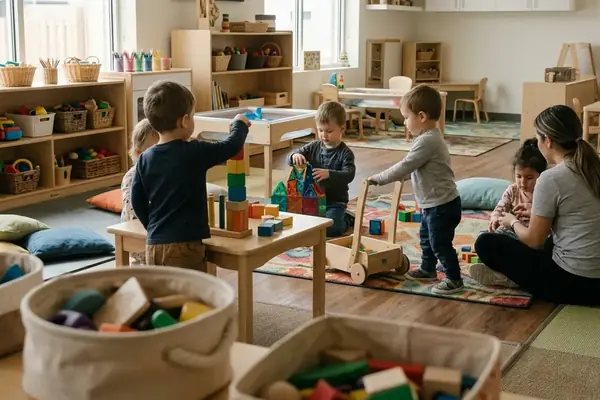
Developmental tracking captures a clear progression from simple stacking at ages 2 to 3 to complex systems at ages 6 to 8. Children use the exact same core materials throughout this entire span, adapting their building techniques as their spatial reasoning matures.
Effective storage and rotation strategies keep materials visible and inviting without overwhelming the space. Low, open shelving encourages independent access and cleanup.
How Parents and Educators Put Loose Parts to Work
Implementation requires intentional setup. In a home scenario, caregivers often use a shallow tray measuring roughly 12 by 18 inches to contain the loose parts. This tray holds blocks, cardboard tubes, and fabric scraps for weekly build challenges with child-chosen goals.
A classroom scenario looks different. Educators establish a dedicated construction corner with clear sorting bins, photo documentation of past builds, and reflection prompts after clean-up.
Note: Focus on starter material categories like structural, connector, decorative, and natural items rather than branded shopping lists.
When a Scripted STEM Kit Still Earns Its Place
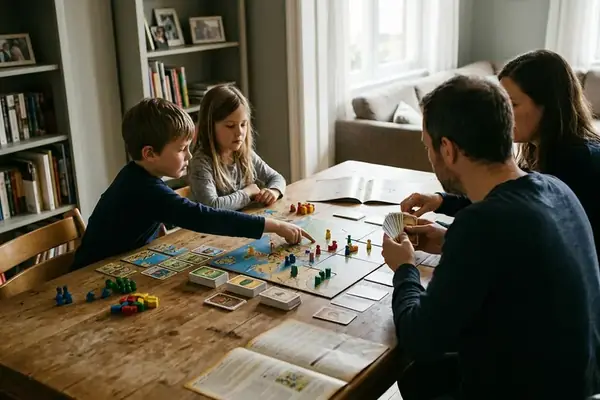
Scripted kits still serve clear use cases. They excel at introducing a specific mechanism or supporting a child who thrives with explicit steps first. Activity schedules often utilize them for shared family project nights lasting 1 to 2 hours.
Open-ended materials cannot replace explicit instruction when a child needs to learn the specific polarity requirements of a basic electrical circuit. Treat kits as occasional catalysts. Afterward, invite children to hack, rebuild, or combine leftover parts with open materials.
Summary: Make open-ended blocks the foundation of a child's play environment. The daily practice of designing, failing, and rebuilding from scratch builds the exact cognitive resilience that step-by-step manuals actively bypass. Invest in a high-quality set of unit blocks, leave them accessible, and let the child dictate the blueprint.